Digital marketing is the sum of all marketing and engagement activities done through online media channels. The reason it has become more popular as compared to conventional channels of TV, Print, Radio, OOH etc. is because it is:-
a. Cost effective
b. Easily Measurable
c. Targets the right audience
d. Wider Reach
e. Interact with the audience
f. More creative
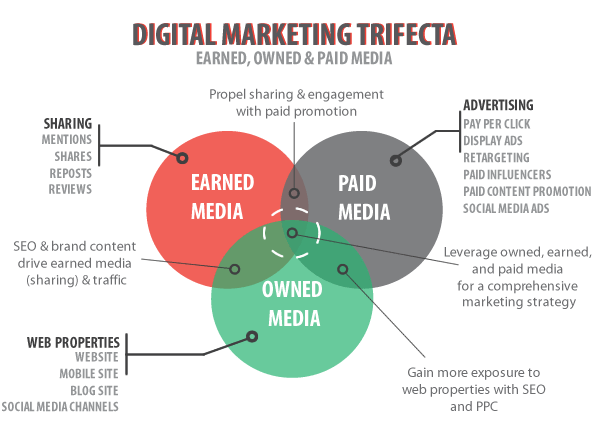
We can put digital marketing channels into 3 different buckets:
1. Owned Media
2. Paid Media
3. Earned Media
Owned Media
Owned media, as the name suggests, are the media properties we own, manage and control. This is a basic necessity to be on the digital space. These assets build the foundation of your brand’s digital footprint. It includes website, mobile site, blog site and social media channels. Owned media can be optimized using Search Engine Optimization (SEO) and Digital Asset Optimization (DAO)
Paid Media
Paid media is promoting content to drive traffic to your owned media. It is the best strategy to controlling and targeting the audience who will see your content. It also helps us get more earned media and thus help create more exposure. Search Engine Marketing (SEM) , Social Media Marketing (SMM) are the key ways to promote content.
Earned Media
Earned media is online word-of-mouth though social shares, likes , comments, mentions, reviews, reposts etc. It helps build trust and loyalty for the brand. High quality content and optimized search of owned media together with effective paid media strategy helps drive earned media.
Search Engine and Search Engine Optimization
Search Engine
When we put a query in search engine, search engine performs 2 functions:
a. Indexing and Crawling: Based on the search query, the search engine searches for the relevant pages by crawling and indexing millions of webpages.
b. Answering the queries/ questions: It then checks which pages are the most relevant by their page rank and answers the question by displaying the webpages which are of higher page rank.
Thus, it becomes important that your webpage has higher page rank so that it becomes more searchable. That is where SEO plays a huge role.
Search Engine Optimization (SEO)
SEO is the art of getting your website found via search engines. It helps build traffic to your website. SEO can be further segregated into On-page SEO and Off-page SEO.
a. On-Page Optimization – On page SEO refers to how we can optimize our individual webpages so that they rank higher in the Search Engine Result Pages (SERPs). It can be done by optimizing our content and HTML source code. The below flow chart tell us the simple ways of doing on-page SEO.
Key word selection in the content is extremely important and is the foundation of successful SEO. One can refer to Google Keyword planner to use the keywords more effectively.
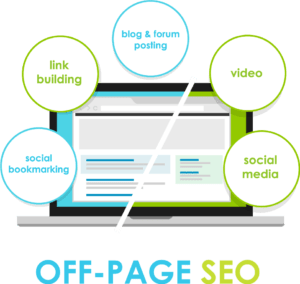
b. Off-Page Optimization – Off page SEO are the actions you take outside your webpages to impact your ranking in the search engine results pages (SERPs). In-bound links help in a huge way to improve your page rank as makes the site more genuine for the search engine or why else would people refer your site. Besides link building, presence in social media, writing guest blogs, social bookmarking and videos are important as well. Listing your business through Google business on the map is great way to become more searchable.
Digital Asset Optimization (DAO)
SEO focusses only on the optimisation of websites to improve its ability to be found on SERPs. But, Google search results are not just limited to webpages but there are images, videos, conversations etc. which also appear. Thus, it is important to optimise all the digital assets as well. A digital asset is anything you put online. It can be videos, images, podcasts, PDFs, newsletters, webinars etc. The thumb rule for optimising digital assets are:-
a. They come with a full description– Ensure the properties for each of the file type has been filled.
b. They have user-friendly URL– Ensure it is a descriptive URL which makes sense to the audience.
c. They have user-friendly and descriptive file names– The file name should have the relevant keywords from the content.
I will talk about more about Paid Media and Earned Media in the upcoming posts.
 Voyagely
Wow! Thanks for sharing. I have learned so much about filling all file properties with relevant information…
LikeLike